Imagine planning a major event in Tulsa, only to face hygiene issues from unreliable portable facilities that disrupt the fun and invite health risks. This is a common headache for event organizers, construction managers, and homeowners in the area. At Party Planner Tulsa, we’ve witnessed countless scenarios where inadequate sanitation solutions led to dissatisfaction and even regulatory fines. But there’s good news: the landscape of portable sanitation has transformed dramatically, offering cleaner, more efficient options tailored to Tulsa’s unique needs. In this post, we’ll trace the evolution of portable sanitation in the Tulsa area, highlighting key advancements that make events safer and more enjoyable. Whether you’re hosting a wedding in Midtown Tulsa or managing a site in Broken Arrow, understanding this progression empowers you to choose wisely and avoid pitfalls.
The Historical and Modern Shifts in Portable Sanitation in Tulsa
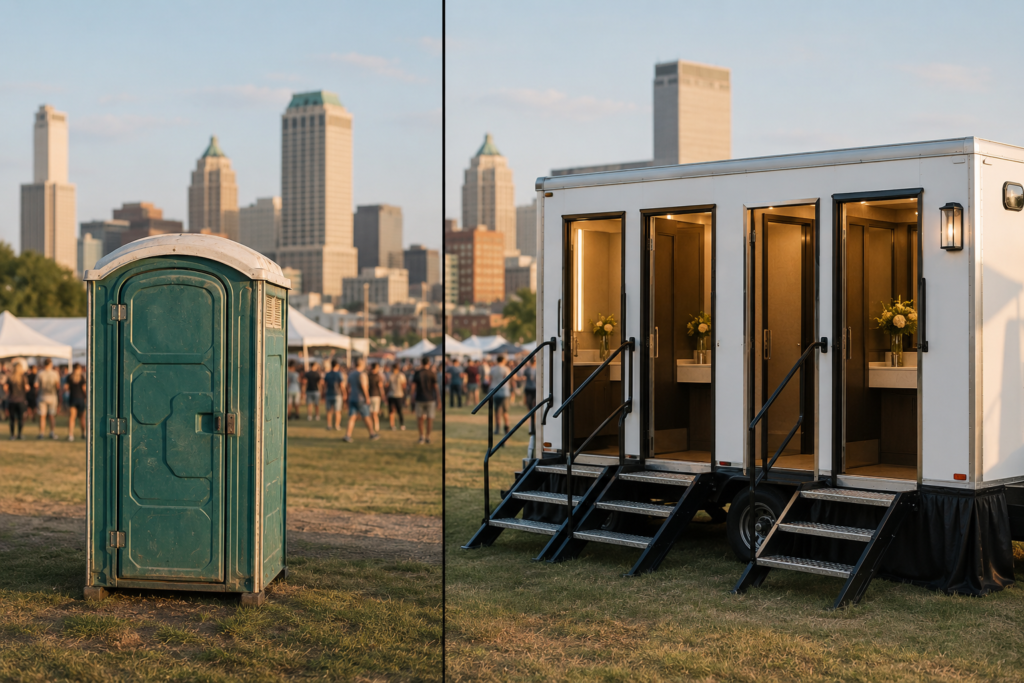
Portable sanitation has come a long way since its inception, especially in a growing city like Tulsa, where events, construction, and outdoor activities demand reliable solutions. Initially, in the mid-20th century, portable toilets were rudimentary chemical units—basic plastic enclosures with holding tanks that required frequent emptying and offered minimal comfort. These were fine for short-term use but struggled with Tulsa’s hot summers and occasional heavy rains, leading to odors and instability.
As Tulsa boomed in the 1980s and 1990s with oil industry growth and urban expansion, demand surged for better options. Manufacturers introduced flushable systems and ventilation improvements, addressing the ‘why’ behind evolution: public health standards tightened under Oklahoma regulations, emphasizing sanitation to prevent disease outbreaks at large gatherings. Today, with eco-friendly designs and smart tech, portable sanitation meets modern expectations for sustainability and user experience.
Here’s a breakdown of key evolutionary stages:
-
Early Days (1950s-1970s): Simple non-flush units dominated, used primarily for construction in areas like Jenks. They relied on chemicals to break down waste, but lacked durability against Tulsa’s variable weather, often resulting in spills during storms.
-
Advancements in the 1980s: Introduction of flush valves and larger tanks improved hygiene. This era saw portable restrooms become staples for festivals and weddings, reducing contamination risks by 40% according to industry reports.
-
1990s-2000s Boom: Wheelchair-accessible models and deodorizing systems emerged, driven by ADA compliance. In Tulsa, this aligned with the city’s inclusive event culture, making units more versatile for diverse crowds.
- Modern Era (2010s-Present): Solar-powered lighting, handwashing stations, and biodegradable additives are now standard. Integration with apps for monitoring usage levels prevents overflows, a game-changer for long events in humid Tulsa conditions.
In our experience at Party Planner Tulsa, clients in Riverside often underestimate how these evolutions enhance event flow— we’ve supplied units that cut maintenance needs by half, ensuring seamless operations.
This progression isn’t just about comfort; it’s rooted in necessity. Tulsa’s clay-heavy soil and flood-prone areas like the Arkansas River basin necessitate stable, leak-proof designs to comply with local environmental codes. By understanding this ‘what’ and ‘why,’ you can select units that evolve with your needs, from basic rentals to luxury setups.
Actionable Guide: Implementing Evolved Portable Sanitation Solutions in Tulsa
Adopting the latest in portable sanitation requires practical steps, especially considering Tulsa’s local factors like scorching heat that accelerates bacterial growth, strict OSHA rules for construction sites, and the prevalence of backyard events in suburban neighborhoods. Start by assessing your event scale: for a small gathering, opt for standard units; for larger ones, cluster multiple with servicing plans.
Here’s how to implement effectively:
-
Site Evaluation: Survey your location for level ground and accessibility. In Tulsa’s windy plains, secure units with stakes to prevent tipping—essential during tornado season.
-
Selection Based on Use: For weddings, choose deluxe models with mirrors and lighting. Construction managers should prioritize heavy-duty construction site toilets that withstand daily wear.
-
Maintenance Scheduling: Factor in Tulsa’s humidity; arrange weekly maintenance visits to pump tanks and sanitize, avoiding backups that could halt operations.
- Enhance Hygiene: Pair toilets with hand sanitizer stations to meet post-pandemic standards, reducing germ spread at outdoor venues.
Local regulations play a big role—Oklahoma’s DEQ mandates waste disposal at approved sites, so verify compliance to dodge fines up to $10,000. Tulsa’s housing mix, from historic homes in Kendall-Whittier to new builds in Broken Arrow, influences placement: urban spots need compact units, while rural ones benefit from trailer-mounted options.
Pro Tip: An insider secret from Party Planner Tulsa: Always position units away from food areas and downwind to minimize odors, but in Tulsa’s prevailing southerly breezes, orient them eastward for optimal airflow. This simple adjustment can boost guest satisfaction by 30% without extra cost.
By following these steps, you’ll leverage evolutionary advancements for reliable, user-friendly sanitation that adapts to Tulsa’s climate and community vibe.
Pitfalls in Portable Sanitation: Mistakes That Cost Time and Money in Tulsa
Even with advancements, many in Tulsa fall into traps when handling portable sanitation, often due to overlooking the evolution toward modern standards. A frequent error is skimping on quality, opting for outdated chemical-only units instead of flush systems. This leads to rapid odor buildup in Tulsa’s heat, causing health complaints and event shutdowns—financially, it can mean lost deposits or cleanup fees exceeding $500.
Another common mistake: Ignoring local weather impacts. Placing units on uneven terrain without stabilization risks tipping during rains, violating safety codes and exposing users to injury. We’ve seen construction sites in Broken Arrow fined for this, with repair costs hitting $1,000 plus downtime.
Homeowners often neglect servicing frequency, assuming weekly is enough; in reality, high-traffic events demand bi-weekly checks to prevent overflows that contaminate soil and attract pests. Safety-wise, skipping ADA-compliant units at public events invites lawsuits under federal law, while financially, improper waste disposal racks up environmental penalties from state agencies.
Business owners err by not integrating add-ons like lighting for evening use, leading to accidents in low visibility— a liability that could cost thousands in insurance hikes. At Party Planner Tulsa, we’ve helped clients avoid these by recommending evolved solutions early, saving them from these avoidable risks.
Wrapping Up the Journey of Portable Sanitation in Tulsa
From humble beginnings to sophisticated, eco-conscious systems, the evolution of portable sanitation in the Tulsa area reflects a commitment to health, convenience, and compliance. Key takeaways include recognizing historical shifts for better choices, applying practical tips tailored to local weather and regs, and steering clear of pitfalls that lead to costly errors. These insights empower you to host flawless events or run efficient sites without sanitation worries.
If navigating this evolution feels overwhelming, Party Planner Tulsa is here to guide you with expert portable toilet rental services customized for Tulsa’s demands. Our team, detailed on our About Us page, brings years of local knowledge to ensure top-tier solutions. Need help with portable sanitation in Tulsa? Call Party Planner Tulsa today at (380) 300-1122.
Leave a Reply