Planning a wedding or party in Oklahoma can be exciting, but one detail often trips up even the most organized hosts: figuring out the right number of porta potties. Imagine the discomfort of long lines or inadequate facilities disrupting your special day—it’s a common headache we’ve encountered countless times at Party Planner Tulsa. As Tulsa’s trusted portable toilet supplier, we’ve helped hundreds of events run smoothly by providing just the right setup. In this guide, we’ll break down how to calculate your needs based on guest count, event duration, and local factors, ensuring everyone stays comfortable without over- or under-provisioning. Whether it’s a backyard bash in Broken Arrow or a grand wedding in Owasso, getting this right saves stress and keeps the fun flowing.
Understanding the Basics: How Many Porta Potties Do You Really Need?
When it comes to events like weddings or parties in Oklahoma, the number of porta potties isn’t a guess—it’s a calculation rooted in guest comfort, health standards, and practical logistics. The core concept revolves around providing one unit per a certain number of attendees, adjusted for factors like event length and type. For standard events, industry guidelines suggest one porta potty for every 50-75 guests over a 4-6 hour period. But why this ratio? It prevents overcrowding, maintains hygiene, and complies with Oklahoma health codes that emphasize sanitation to avoid fines or shutdowns.
Breaking it down simply: porta potties, or portable toilets, are self-contained units designed for temporary use, featuring a waste-holding tank, hand sanitizer, and sometimes lighting for evening events. They’re essential because indoor restrooms can’t always handle large crowds, especially outdoors in Tulsa’s variable weather. Overestimate, and you’re wasting money; underestimate, and guests face inconvenience.
Here’s a quick breakdown using bullet points for easy reference:
- Guest Count Formula: For a 100-person wedding, aim for at least 2-3 units (one per 50 guests). Add one more for every additional 50 attendees.
- Event Duration Adjustment: If your party runs 8+ hours, increase by 20-30% to account for higher usage. Short events under 4 hours can stick to the base ratio.
- Type of Event: Weddings often need more due to formal attire and alcohol consumption—factor in 1.5 times the standard for receptions. Casual parties might require fewer.
- Demographic Considerations: Events with more children or elderly guests benefit from extra units or accessible models with handrails.
- Oklahoma-Specific Rules: Tulsa County regulations mandate a minimum of one unit per 100 people for public gatherings, with handwashing stations required for food service.
In our experience at Party Planner Tulsa, we’ve seen events in Midtown Tulsa falter without proper planning, leading to rushed cleanings mid-party. That’s why we recommend starting with these baselines and tweaking for your venue’s layout—whether it’s a park in Brookside or a private estate in Glenpool. By understanding these fundamentals, you position your event for success, blending convenience with compliance.
This approach not only ensures safety but also elevates the guest experience. For instance, during peak summer heat in OK, hydrated guests use facilities more frequently, so bumping up the count prevents bottlenecks. We’ve supplied portable toilet rental for everything from intimate gatherings to large festivals, always prioritizing these ratios to keep things running smoothly.
Step-by-Step Guide: Calculating and Setting Up Porta Potties for Your Tulsa Event
Now that you grasp the basics, let’s dive into actionable steps to determine and implement the perfect porta potty setup for your Oklahoma wedding or party. Start by assessing your event’s scale: tally confirmed guests and add a 10-20% buffer for plus-ones. Next, consider the venue—outdoor spots in Tulsa like those in Broken Arrow often lack plumbing, making portables indispensable.
Step 1: Use the Ratio Calculator. Base it on 1 unit per 50 guests for 4 hours. For a 200-person party lasting 6 hours, that’s 4 units minimum, plus one handicap-accessible option.
Step 2: Factor in Local Tulsa Influences. Oklahoma’s hot, humid summers increase fluid intake, boosting usage by 25%. Rainy springs might require mud-resistant placements. Regulations from the Tulsa Health Department insist on units spaced 50 feet apart for easy access and daily servicing if events exceed 24 hours.
Step 3: Choose the Right Types. Standard units work for basics, but weddings shine with upgraded options. Place them discreetly near high-traffic areas but away from food zones to meet hygiene rules.
Step 4: Plan Delivery and Placement. Schedule event toilet delivery 24-48 hours early, ensuring even ground and proximity to a water source for servicing.
Step 5: Maintenance Schedule. For multi-day events, arrange mid-event pumps to keep things fresh—essential in Tulsa’s variable climate.
Local factors like urban density in Midtown Tulsa mean tighter spacing, while rural Glenpool venues allow more spread-out setups. We’ve optimized countless events here, noting how wind patterns affect odors, so positioning upwind is key.
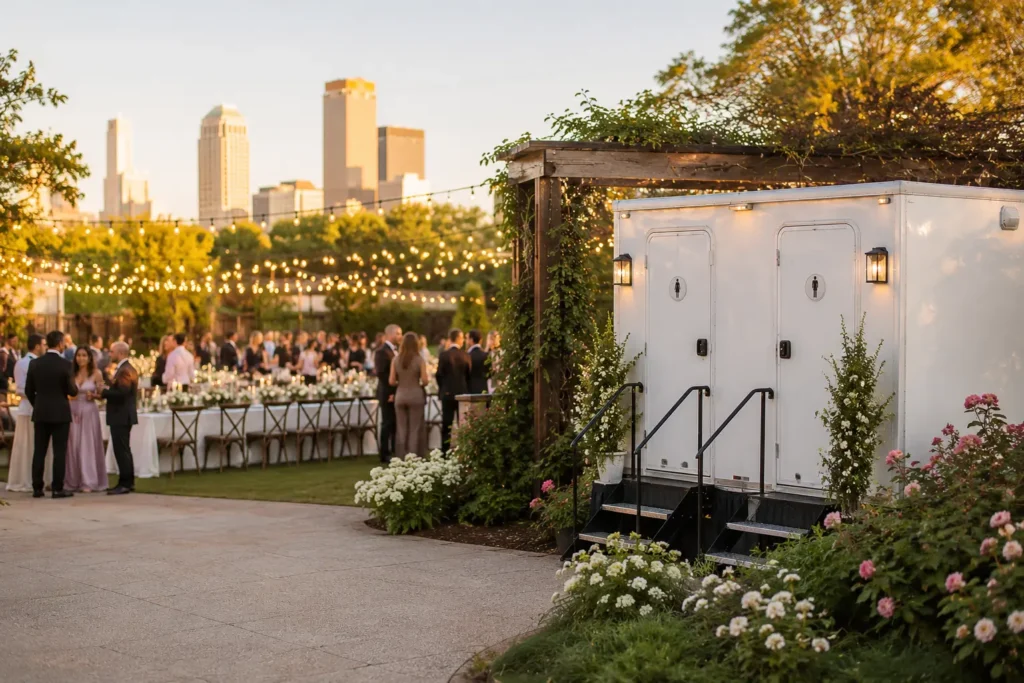
Pro Tip: For weddings, always include a luxury upgrade—our VIP toilet trailers feature flushing toilets and AC, turning a necessity into a comfort that impresses guests. This insider secret prevents complaints and elevates your event’s polish without breaking the bank.
Following these steps ensures a seamless experience. If you’re hosting in areas like Owasso, where family-oriented parties are common, add family units with changing tables. This methodical approach, honed from years in Tulsa, minimizes disruptions and maximizes enjoyment.
Common Mistakes to Avoid When Planning Porta Potties for Your Event
Even seasoned planners slip up on porta potty logistics, leading to awkward situations or added costs. One frequent error is underestimating guest numbers—hosts often base counts on RSVPs alone, ignoring walk-ins, which can overload units and cause spills or long waits. In Tulsa’s party scene, this risks health violations, with fines up to $500 per infraction under OK codes.
Another pitfall: Ignoring event type specifics. Casual backyard parties in Brookside might seem low-key, but alcohol-fueled gatherings spike usage; skimping here leads to unclean conditions, turning guests away and damaging your reputation. Financially, emergency rentals mid-event can double costs— we’ve seen clients pay 50% more for last-minute luxury restroom rentals.
Placement blunders are common too: tucking units too far or in direct sun exposes them to overuse or discomfort. Safety-wise, uneven terrain in Glenpool venues can cause tipping hazards, endangering attendees. Skipping servicing for longer events breeds odors and bacteria, posing health risks like infections, especially in humid OK weather.
Don’t forget accessibility—overlooking ADA-compliant units alienates guests and invites lawsuits. At Party Planner Tulsa, we’ve mitigated these issues for clients in Broken Arrow by auditing setups pre-event, avoiding the $1,000+ in potential rework. By steering clear of these mistakes, you safeguard your budget, safety, and satisfaction.
Wrapping Up: Ensure Your OK Event Runs Flawlessly
Calculating the right number of porta potties boils down to guest count, duration, and local tweaks for Tulsa’s unique environment—aim for one per 50 guests as a starting point, adjusting upward for weddings or longer parties. Avoid underestimating to prevent discomfort, and always factor in regulations for peace of mind. With these insights, your Oklahoma wedding or gathering will feel polished and guest-friendly.
If crunching numbers feels overwhelming, let the experts handle it. At Party Planner Tulsa, we specialize in tailored solutions, from standard rentals to upscale options, serving all of Tulsa and beyond. Visit our about us page to learn more about our commitment to seamless events. Need help with how many porta potties for your OK wedding or party in Tulsa? Call Party Planner Tulsa today at (380) 300-1122.
Leave a Reply